Courses After 12th Science Beyond BTech and MBBS: PCM/PCB Research and Data-Science Routes
EZCareerGuide Desk · 5 Nov 2026
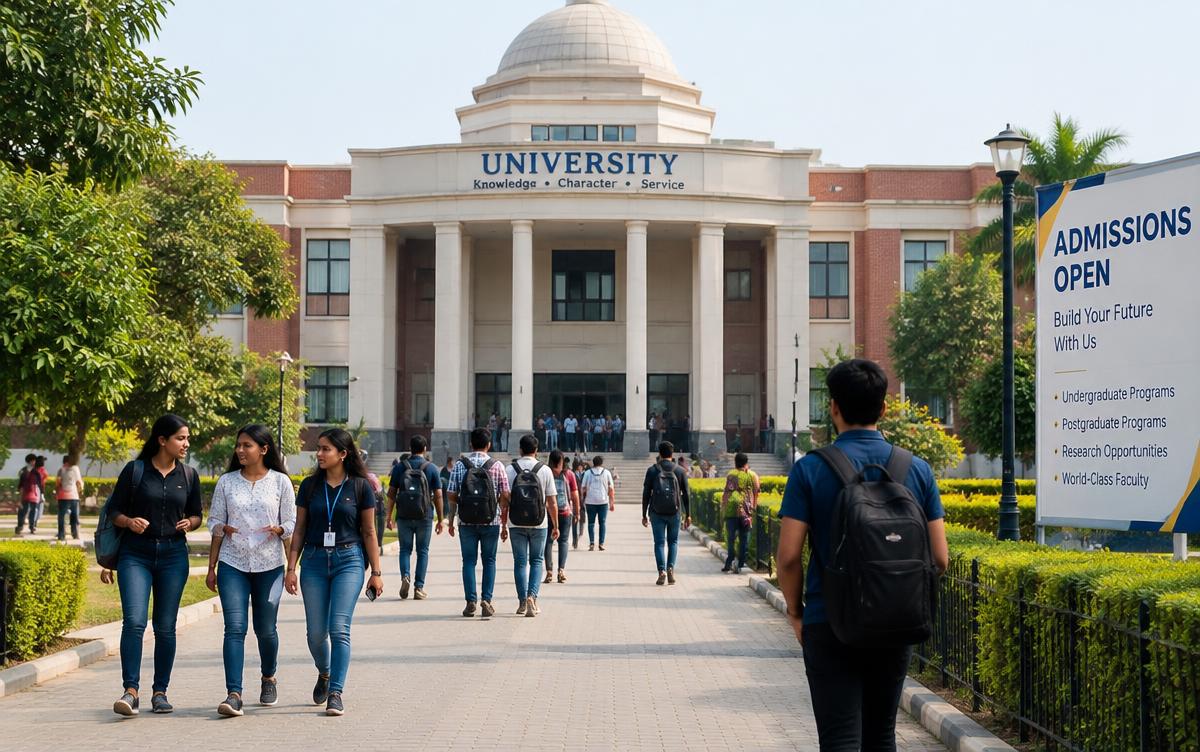
Looking beyond engineering and medicine? This eligibility-first guide compares research, computational science and quantitative-economics options using verified 2026 admission rules, while explaining why eligibility for an entrance test does not mean eligibility for every programme.
Choosing courses after 12th science does not have to begin with BTech or MBBS. If you enjoy experiments, mathematical problems or understanding how the natural world works, research-oriented science degrees deserve a place on your shortlist. The useful first question is not which course promises the highest salary. It is which programmes accept your school subjects, what they teach and how you must apply.
This guide uses a 2026 verified-admissions baseline drawn from the official documents identified below. It is an evergreen planning guide, not a 2027 admission announcement. No verified 2027 schedule was found in the reviewed sources. Helpdesk placeholders mentioning 2027 on the NEST website do not establish that applications are open or that eligibility will remain unchanged.
Start with your subject combination. PCM means Physics, Chemistry and Mathematics; PCB means Physics, Chemistry and Biology; PCMB includes all four. These combinations help you make an initial shortlist, but subject eligibility is only one part of admission eligibility. Marks requirements, passing-year conditions, entrance performance and the institution’s application process must also be checked for your admission year.
For PCM students, the verified examples include the general IISER BS–MS route, NEST-linked integrated MSc programmes and IISc’s BS (Research), subject to their remaining rules. PCB students satisfy the stated subject-combination condition for the general IISER BS–MS route and NEST-linked programmes, but not the Mathematics requirement for IISc’s BS (Research). PCMB students satisfy the subject-combination conditions described here, but that does not guarantee admission.
The general IISER route is a five-year BS–MS, with admission through the IISER Aptitude Test, or IAT. The March 2026 IAT brochure requires at least three subjects among Biology, Chemistry, Mathematics and Physics. This makes both PCM and PCB relevant starting combinations. However, do not extend this general rule to every specialised programme listed under the same entrance route. Read the programme-specific conditions in the official brochure: https://web.iiseradmission.in/assets/pdfs/IB_IAT_2026_ENG.pdf.
IISER Kolkata’s five-year BS–MS in Computational and Data Sciences illustrates that distinction. Under the 2026 rules, Mathematics in the qualifying examination is compulsory. A PCB student without Mathematics should therefore not assume eligibility simply because the general IISER science route accepts the PCB combination. Students considering this programme should examine its curriculum rather than treating the words “data sciences” as a promise of a particular job.
Two other interdisciplinary examples are IISER Bhopal’s BS in Economic Sciences and IISER Tirupati’s BS in Economic and Statistical Sciences. The 2026 brochure requires Mathematics in the qualifying examination for both. They are useful options to investigate if you are interested in quantitative approaches to economic questions. Check the programme structure, duration and course content in the relevant official material before comparing them with a conventional economics degree.
Another basic-science pathway is the five-year integrated MSc at NISER and UM–DAE CEBS, accessed through NEST. The updated NEST 2026 brochure, dated 12 January 2026, requires at least three of Biology, Chemistry, Mathematics and Physics in Classes XI–XII, alongside other eligibility conditions. PCM and PCB meet that subject-combination condition. This is an entrance-based alternative to engineering or medicine, not an example of admission without an entrance examination.
IISc’s four-year BS (Research) needs a different eligibility check. Its admission notice dated 4 February 2026 requires Physics, Chemistry and Mathematics as main qualifying-examination subjects. For Indian nationals and OCI(I) applicants, the verified 2026 selection routes are JEE Advanced or IAT. The fact that IISc and IISERs both use IAT does not make their subject requirements interchangeable. PCB without Mathematics does not satisfy the stated IISc requirement.
Application procedure is another important difference. IISc’s announcements updated on 30 April 2026 confirm that BS (Research) has its own application process, while its BTech admissions use JoSAA. Registering for IAT does not automatically apply you to IISc. For each shortlisted institution, record the entrance registration and the institutional application separately, then verify whether any additional admission steps apply. Do not assume one form covers every institution accepting an examination.
To make a practical comparison sheet, give each programme its own row. Record the exact degree name, duration, compulsory school subjects, entrance route, institutional application requirement and official verification source. Where a detail is not established by the reviewed material, mark it “to verify” rather than borrowing a rule from another programme. This is more reliable than a long course list that treats every science student as equally eligible.
Next, compare the academic experience. Read the curriculum for the balance between laboratory work, mathematics, computing, theory and projects. Ask when students choose a specialisation and what supervised research opportunities are described. Programme names alone cannot answer these questions. A student who enjoys biology experiments may want a different course structure from someone who prefers statistical analysis, even when both are considering research-oriented degrees.
Build a cost worksheet using current official figures for tuition, compulsory charges, accommodation and other likely expenses. Check scholarship conditions separately rather than assuming support is automatic. Also investigate the further-study requirements of careers that interest you. A degree is a qualification, not a guaranteed research post or placement. EZCareerGuide’s engineering-focused guide to evaluating placement claims offers a useful checklist, but its outcomes should not be transferred to science programmes (/engineering-placements-how-to-read-college-claims-and-research-real-outcomes).
If your shortlist extends to university science degrees, use EZCareerGuide’s CUET UG subject-choice guide as background, then verify each university’s course-specific rules (/cuet-ug-for-central-universities-pattern-subject-choices-and-preparation). If IISc’s JEE Advanced route interests you, consult the entrance explainer without assuming that the IIT admission process also covers IISc BS (Research) (/jee-advanced-explained-exam-pattern-preparation-and-the-iit-admission-path).
Before applying, replace this 2026 baseline with the brochure for your actual admission year. Recheck compulsory subjects, marks thresholds, passing-year rules, applicant-category conditions, deadlines and separate forms. Keep the relevant official documents with your comparison sheet. The strongest shortlist is not the one with the most fashionable degree names: it is the one where you meet the rules, understand the curriculum and can explain why each programme fits your interests.
AI-assisted article, reviewed by the editor.
Useful resources
Editorial & data policy: Admission dates appear only after an official notice is checked. Uncertain updates await editorial review; AI-assisted articles require staff approval before publication. College records show their source and verification status. Historical predictor estimates are not admission guarantees. Always confirm eligibility, fees and deadlines with the organising authority before applying.