JEE Advanced Subject-Wise Cutoff: How Both Papers Count—and Why Your Total Isn’t Enough
EZCareerGuide Desk · 11 Nov 2026
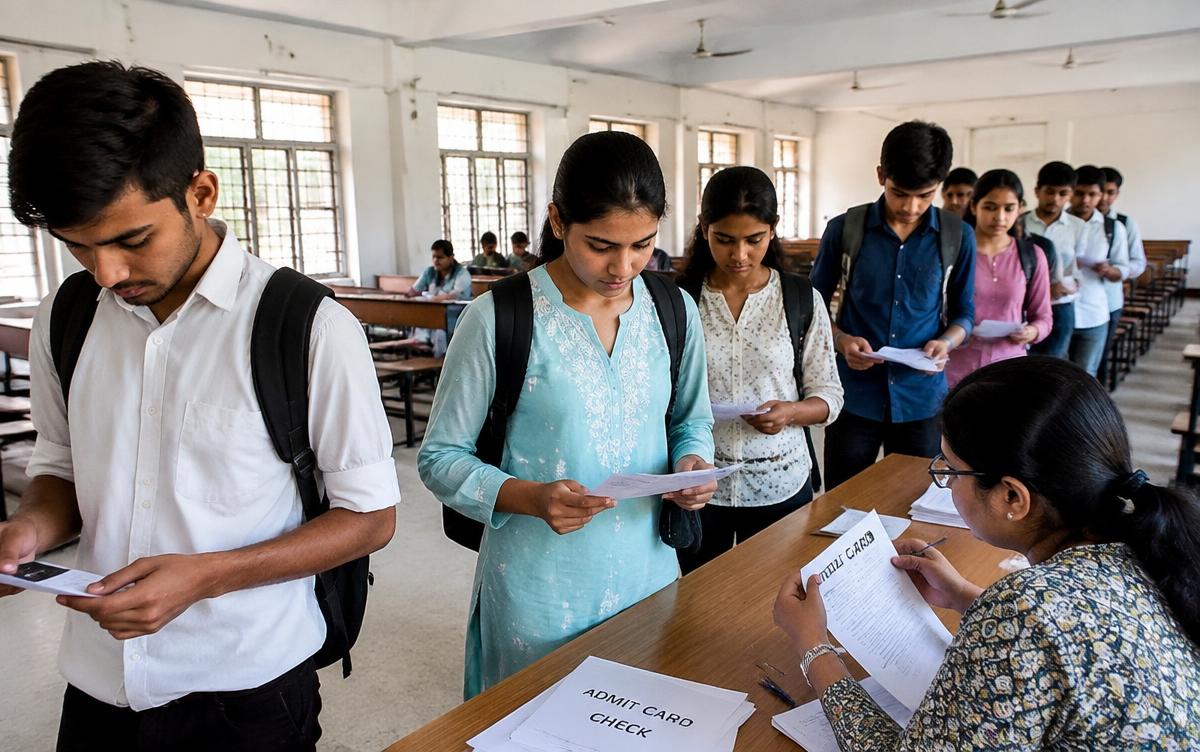
JEE Advanced checks each subject’s combined score across both papers, alongside a separate aggregate minimum. These hypothetical examples show why a strong total can still fall short, how Paper 2 can improve a weak subject score, and what to record after every mock.
If you are searching for “jee advanced subject wise cutoff”, the key rule is this: each subject’s marks are combined across Paper 1 and Paper 2. The subject minimum is checked against that combined score, not separately against each paper. You must also meet the applicable aggregate minimum. A high total cannot compensate for a subject that falls below its required minimum.
These are reference rules from Section 22 of the JEE Advanced 2026 Information Brochure and the official results release dated 1 June 2026. Both papers must be attempted to be considered for ranking. The supplied research did not locate an official JEE Advanced 2027 brochure or schedule, so students targeting 2027 should recheck the rules when that documentation appears.
This distinction matters early in preparation. NTA’s notice dated 24 October 2026 invited applications for JEE Main 2027 Session 1 and identified Main Paper 1 as an eligibility test for Advanced. Becoming eligible to appear for Advanced, qualifying for an Advanced rank list, and securing an IIT seat are nevertheless separate stages.
To calculate your subject scores, add Physics marks from Paper 1 to Physics marks from Paper 2. Repeat the calculation for Chemistry and Mathematics. Your aggregate is the sum of those three combined subject scores. Use the marks awarded after applying the relevant marking scheme, including negative marks where applicable, rather than simply counting correct answers.
For rank-list inclusion, you need to satisfy every applicable subject minimum as well as the aggregate minimum. There is no averaging rule under which extra Physics marks erase a Mathematics shortfall. Equally, clearing all three subject minima does not automatically mean that you have cleared the aggregate requirement.
Consider a completely hypothetical practice rule: at least 10 marks in each combined subject and at least 60 marks in aggregate. These numbers are invented only to explain the calculation. They are not official cutoffs, historical figures, predicted 2027 thresholds or recommended preparation targets. All three examples below use this same imaginary rule.
In the first example, a student scores 70 in Physics, 71 in Chemistry and 9 in Mathematics after combining both papers. The aggregate is 150, comfortably above the imaginary aggregate minimum of 60. However, Mathematics is below the imaginary subject minimum of 10. The student fails this practice qualification check despite the strong total. This is why asking whether 100 or 150 marks is “enough” without checking the subject split can be misleading.
In the second example, the combined scores are 15 in Physics, 18 in Chemistry and 20 in Mathematics. Every subject clears the imaginary minimum of 10, but the aggregate is only 53. The student therefore fails the aggregate condition. A balanced scorecard can still fall short if the total is insufficient; both tests must be passed together.
In the third example, a student earns 3 marks in Mathematics in Paper 1 and 12 in Paper 2. The combined Mathematics score is 15, which clears the imaginary subject minimum. With combined Physics and Chemistry scores of 22 and 25, the aggregate becomes 62. All conditions in this hypothetical example are met. The weak Paper 1 Mathematics score is not independently disqualifying because the subject check uses both papers together.
That example should not become a strategy of deliberately neglecting one paper. Both papers must be attempted, and a later paper offers no guaranteed recovery. It simply explains why you should assess the complete two-paper performance rather than treating one difficult subject section as a final result.
For preparation, build a mock-review worksheet that makes these checks visible. The following is editorial study advice, not an official preparation formula. Give Physics, Chemistry and Mathematics separate rows, and record Paper 1 marks, Paper 2 marks and the combined subject score. Record the aggregate underneath. Use the mock’s stated marking scheme consistently.
Add a separate record of marks lost through negative marking in each subject and paper. Those losses are already reflected in your net score, so do not subtract them again. Recording them separately helps you identify whether the problem is risky guessing, misunderstood instructions, calculation slips or gaps in knowledge. Also note recurring conceptual errors and questions you left unattempted because of time pressure.
After each full mock, ask whether one subject repeatedly threatens your overall performance and whether the same weakness appears in both papers. Choose a specific repair task, such as revisiting a concept and solving related questions before the next test. Do not turn a previous year’s qualifying minimum into your preparation target: historical qualification data is neither a future cutoff nor an admission guarantee.
Keep the admission stages separate when reviewing your options. JEE Main performance can form part of eligibility to appear for Advanced, subject to the applicable rules. Advanced rank-list qualification then requires the relevant subject and aggregate conditions. IIT allocation is a further process; qualification and participation in seat allocation do not guarantee admission, as Section 23 of the 2026 Advanced brochure explains.
Qualified candidates seeking IIT allocation must separately complete JoSAA registration and choice filling, as the official announcement dated 3 June 2026 stated for that cycle. If you miss the applicable Advanced qualification conditions, assess your other routes separately. Under Sections 18–19 of the JoSAA 2026 Business Rules, IIT rank lists are based on Advanced performance, while NIT+ rank lists are based on Main performance. An Advanced subject shortfall does not by itself determine your Main-based options; those depend on the relevant eligibility and allocation rules.
For broader background, read EZCareerGuide’s JEE Advanced Explained (/jee-advanced-explained-exam-pattern-preparation-and-the-iit-admission-path). Once you are checking allocation steps, use the JoSAA counselling walkthrough (/josaa-counselling-walkthrough-choice-filling-seat-allotment-and-documents). The practical takeaway is straightforward: review combined Physics, Chemistry and Mathematics scores first, check the aggregate separately, and never mistake qualification for a guaranteed IIT seat.
AI-assisted article, reviewed by the editor.
Useful resources
Editorial & data policy: Admission dates appear only after an official notice is checked. Uncertain updates await editorial review; AI-assisted articles require staff approval before publication. College records show their source and verification status. Historical predictor estimates are not admission guarantees. Always confirm eligibility, fees and deadlines with the organising authority before applying.