JEE Advanced Explained: Exam Pattern, Preparation and the IIT Admission Path
EZCareerGuide Desk · 15 Oct 2026
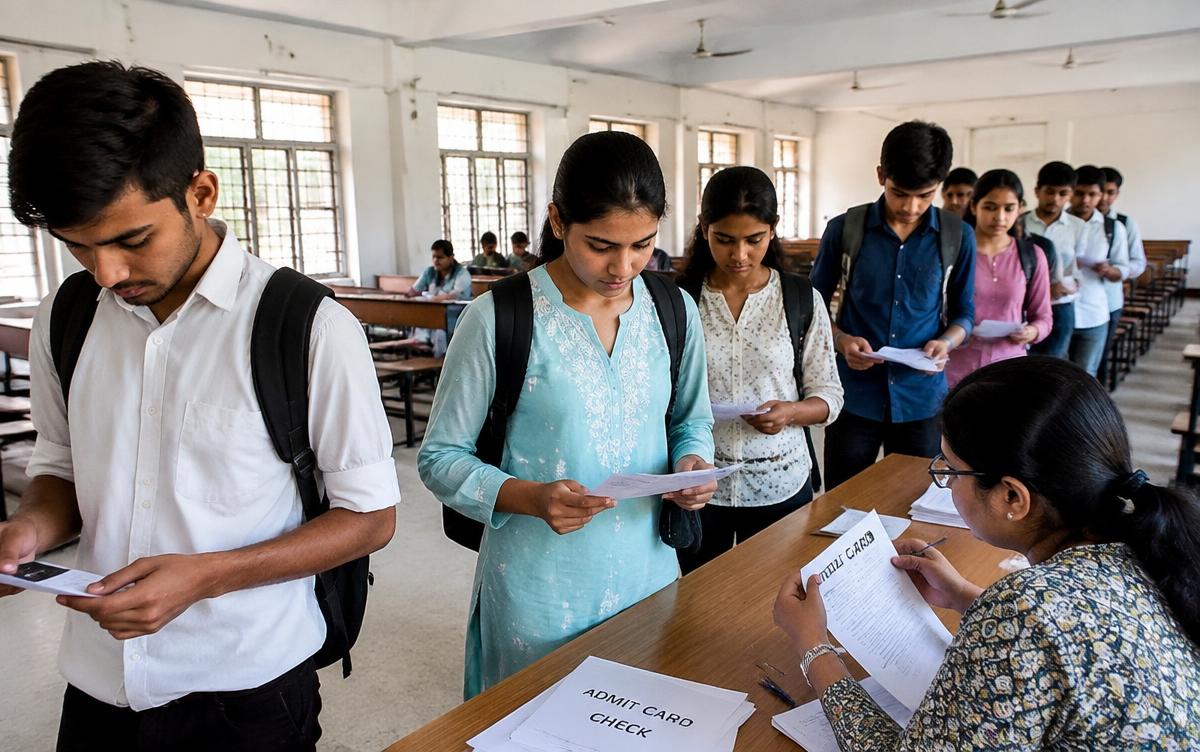
JEE Advanced tests how well students can apply Physics, Chemistry and Mathematics concepts to unfamiliar problems. Understand its changing question pattern, build a preparation strategy focused on depth, and follow the admission process from eligibility checks to JoSAA counselling.
JEE Advanced is the entrance examination used for admission to undergraduate programmes at the Indian Institutes of Technology. For students in Classes 11 and 12, and for droppers, it requires more than speed or memorisation. The examination tests whether you can connect ideas, interpret unfamiliar situations and apply concepts accurately. Preparing well means understanding both the academic challenge and the admission process that follows the examination.
For most Indian candidates, the route begins with JEE Main. You must meet the prescribed JEE Main performance requirement and satisfy the other JEE Advanced eligibility conditions. These can cover age, permitted attempts, the year of first appearance in the Class 12 examination and previous admission to an IIT. Separate provisions may apply to certain candidate categories. Check the latest official JEE Advanced information brochure rather than relying on eligibility summaries from older years.
JEE Advanced is conducted as a computer-based examination with two compulsory papers. Both contain Physics, Chemistry and Mathematics, and candidates must appear in both to be considered for ranking. Do not assume that the second paper is optional or simply repeats the structure of the first. Check the official brochure and examination instructions for the latest duration, arrangements and applicable provisions.
The question format and marking scheme can vary. Papers may include single-correct or multiple-correct questions, numerical-answer questions and other formats described in the instructions. Some sections may award partial marks, while others may apply negative marking. Never carry assumptions from a mock test into the actual examination. Read the instructions for each section carefully, especially how answers must be entered and how incorrect or partially correct responses are treated.
The depth comes from how concepts are used. A Physics problem may combine mechanics with an unfamiliar graphical representation. Mathematics may require you to choose between algebraic, geometric or calculus-based approaches. Chemistry can demand precise factual knowledge as well as reasoning through linked steps. A question that looks long is not necessarily difficult, and a short question may hide a demanding idea. Learning to recognise the underlying concept is central to preparation.
Start with the official syllabus and map it against what you have actually mastered. A chapter is not complete merely because you have watched lectures or read notes. You should be able to explain its main ideas, solve standard problems without assistance and apply those ideas in mixed questions. Use school textbooks, including NCERT where relevant, to strengthen fundamentals, then work through suitable advanced-level material. Avoid collecting more resources than you can revise.
Build difficulty gradually. First solve questions that isolate a single concept. Next attempt problems that combine ideas within a chapter, followed by mixed-topic questions. When stuck, identify the exact obstacle: an unknown concept, a missed condition, weak algebra or an unsuitable method. Study a solution only after making a meaningful attempt, then solve the question again independently later. Understanding a displayed solution is not the same as being able to produce one.
Previous JEE Advanced papers are especially useful because they reveal how familiar topics can be tested in unfamiliar ways. Initially, use selected questions for careful learning without time pressure. Later, attempt complete papers under timed conditions. Treat older marking schemes as examples, not predictions of the next examination. Keep an error log that separates conceptual mistakes, calculation slips, misread instructions and poor question selection. Use those patterns to decide what to revise next.
Your preparation should remain balanced across all three subjects. Rank-list inclusion generally depends on meeting both subject-wise and aggregate qualifying requirements, so ignoring a weak subject can be costly. Check the official rules and qualifying criteria for the relevant examination. At the same time, do not confuse balance with spending identical time everywhere. Allocate extra practice to weaknesses while maintaining the subjects in which you already perform well.
Mock tests should train decision-making as well as knowledge. Practise identifying questions you can solve confidently, leaving unproductive attempts and returning when time permits. After each mock, review skipped questions alongside wrong answers. Could you have solved them with a better method or calmer reading? Simulate the two-paper examination routine periodically to understand fatigue and concentration. Consistent sleep, breaks and sustainable study habits support accuracy better than repeated exhausting study sessions.
Students preparing alongside school should connect board preparation with entrance preparation wherever the syllabus overlaps. Board examinations reward clear written presentation, while JEE Advanced requires efficient application within its question formats. Both deserve attention because school-leaving examination performance also matters for IIT admission eligibility. Droppers should first audit their previous preparation and eligibility. Repeating the same material without addressing recurring mistakes is unlikely to solve the underlying problem.
After the examination, distinguish between qualifying, receiving a rank and obtaining an IIT seat. Meeting the rank-list requirements does not guarantee admission to a preferred institute or programme. Admission also depends on your rank, applicable category, programme eligibility, choices and seat availability. Any previous closing rank is only a reference, not a promise. Check the official sources for the latest qualifying thresholds, admission criteria and counselling information.
The usual IIT seat-allocation route is JoSAA counselling. Eligible candidates must complete the required counselling steps and arrange institute-programme choices in their genuine order of preference. Research course content, academic interests, campus environment and longer-term options before filling choices. Do not select a branch solely because someone claims it has better placements. Check official institute information for current fees, financial assistance and programme requirements. Certain programmes may have additional conditions; architecture admission, for example, requires attention to the applicable Architecture Aptitude Test rules.
Receiving an allotment is not the end of the process. Follow the official instructions for seat acceptance, document verification, payments, willingness options and institute reporting, as applicable. Keep identity, academic and category-related documents ready in the required formats, and respond to verification queries promptly. Check official websites for current schedules and deadlines. Strong preparation creates an opportunity, but careful eligibility checks, informed choices and complete admission formalities are what turn that opportunity into an IIT admission.
AI-assisted article, reviewed by the editor.
Useful resources
Editorial & data policy: Admission dates appear only after an official notice is checked. Uncertain updates await editorial review; AI-assisted articles require staff approval before publication. College records show their source and verification status. Historical predictor estimates are not admission guarantees. Always confirm eligibility, fees and deadlines with the organising authority before applying.