JEE Main Strategy: Eligibility, Two Sessions, Attempt Planning and Preparation
EZCareerGuide Desk · 7 Oct 2026
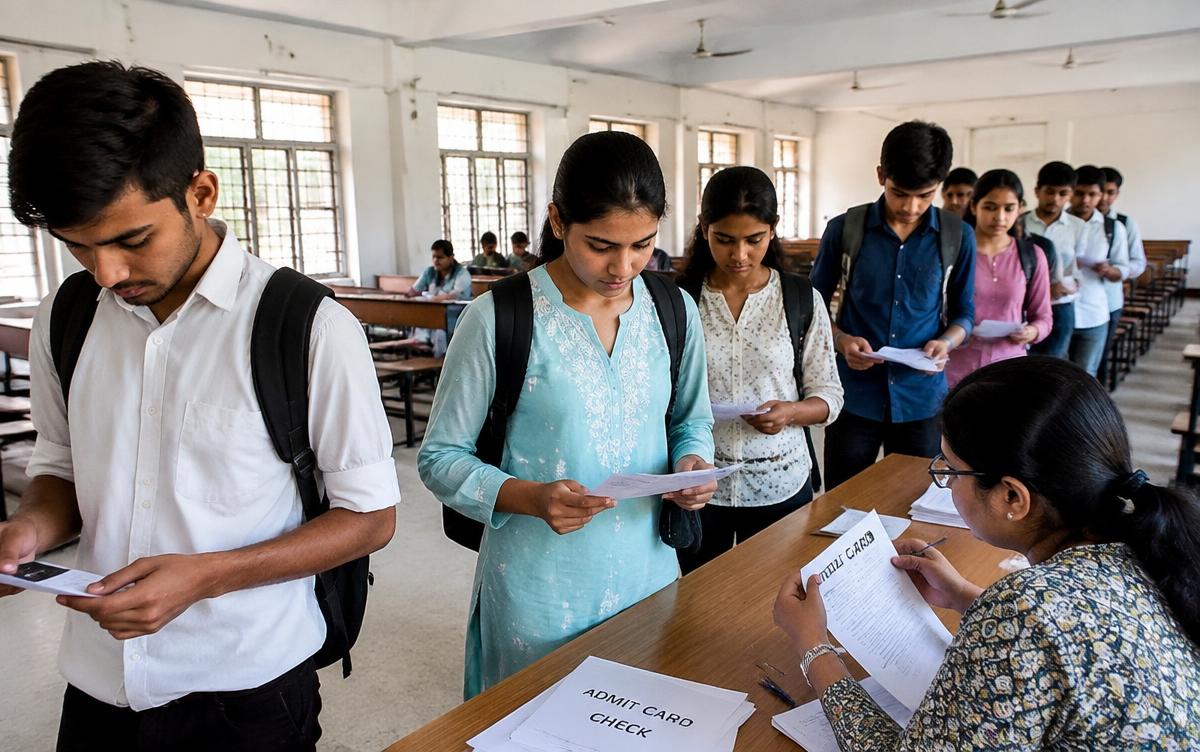
A strong JEE Main plan starts with understanding eligibility, the NTA application process and how the two-session system works. Here is a practical guide to choosing your attempts, preparing steadily and avoiding mistakes that can affect admission.
JEE Main preparation is not only about solving difficult questions. You also need to understand whether you are eligible, which paper matches your course, how to apply correctly and how to use the available sessions. A clear plan helps Class 12 students balance board exams with entrance preparation and gives droppers a focused way to improve. Always use the current National Testing Agency information bulletin as your starting point, rather than relying on social media updates or coaching messages alone.
JEE Main serves several purposes. Its scores are used for admission to participating institutions, including NITs, IIITs and other government-funded technical institutions, through the applicable admission process. It also provides a route to eligibility for JEE Advanced, subject to the announced conditions. However, qualifying for JEE Advanced, securing a JEE Main score and meeting a college’s admission requirements are different things. None of these automatically guarantees a seat.
Before applying, check the eligibility section of the current bulletin carefully. Pay particular attention to the permitted Class 12 passing years, the rules for students appearing in their qualifying examination and the accepted qualifying examinations. Droppers should verify that their passing year falls within the allowed window. If you have improvement results, a different school qualification or an unusual academic history, read the relevant provisions and seek clarification through official channels where necessary. Do not assume that a friend’s eligibility applies to you.
Also separate eligibility to sit for JEE Main from eligibility for admission. Participating institutions may have qualifying-examination performance requirements and prescribed subject combinations. These can depend on the course and admission route. Check the latest official requirements instead of assuming that an entrance score alone is enough. Students seeking reservation or other category-related benefits should confirm the required certificate format, issuing authority and validity conditions well before application and counselling.
Choose the correct paper for your intended course. Paper 1 is for B.E. and B.Tech., Paper 2A is for B.Arch., and Paper 2B is for B.Planning. The subjects and assessment components differ, so preparation for engineering does not automatically cover architecture or planning. Read the current exam pattern, syllabus and mode of examination for your chosen paper. If you select more than one paper, make sure you understand the additional preparation and application requirements.
JEE Main’s two-session structure gives candidates a chance to assess their performance and, where eligible, improve it. Under this structure, candidates can choose one session or both, subject to the published rules. Check the official website for the latest session schedule and registration windows. Do not confuse sessions with your overall eligibility window: taking one session does not change the qualifying-year conditions that determine whether you can appear in a later year.
For students appearing in both sessions, the better total NTA score is generally considered for ranking under the applicable rules. This does not mean combining your best Physics score from one session with your best Mathematics or Chemistry score from another. NTA scores are normalised percentile scores, not the same as raw marks or the percentage of questions answered correctly. Read the current bulletin for the precise scoring, ranking and tie-breaking rules, especially if you are comparing performances across shifts.
Use the first session as a serious scoring opportunity, not merely as a trial. It can also reveal whether your main weakness is incomplete revision, slow calculations, poor question selection or exam anxiety. Afterward, make a short improvement plan based on evidence. If you take the second session, target those weaknesses while maintaining your stronger areas. Class 12 students should protect time for board preparation, while droppers should avoid changing their entire strategy after one disappointing exam.
The NTA application process needs as much care as your study plan. Register through the official JEE Main website, enter personal and academic details accurately, select your paper and examination-city preferences, and upload documents in the prescribed format. Follow the payment instructions and save the confirmation page. Check the latest fee and document specifications on the portal. If applying for another session, follow NTA’s instructions for existing candidates rather than creating an unnecessary duplicate registration.
Keep access to the mobile number and email address used in your application. Check official notices for correction facilities, city information, admit cards and examination instructions. A city intimation slip is not a substitute for an admit card. Verify your admit-card details and carry only the documents and items permitted by the current instructions. Avoid unofficial payment links and never share passwords or verification codes with anyone claiming to guarantee an exam centre, score or admission.
For preparation, begin with the official syllabus and a realistic assessment of your current level. Use textbooks to build concepts, then practise topic-wise questions and previous JEE Main questions. NCERT study is particularly useful for strengthening school-level foundations, but reading alone is not enough. In Physics, connect formulas to their conditions of use. In Chemistry, combine conceptual understanding with regular revision. In Mathematics, practise complete solutions so that you develop accuracy as well as speed.
Build a weekly routine with space for learning, practice, revision and tests. Keep your resources limited enough to revise them properly. Take timed mock tests that reflect the current pattern, then review incorrect answers, guesses and questions left unanswered. Classify mistakes as conceptual, calculation-related or time-management issues. Maintain a brief error notebook and revisit it regularly. During tests, learn to move past a difficult question rather than letting it consume time needed for several manageable ones.
After the exam, follow official notices about response records, provisional answer keys, challenges and results. Submit any challenge only through the prescribed process and with supporting evidence. Once results are available, check the separate requirements for JEE Advanced registration or admission counselling, depending on your goal. JoSAA counselling requires its own actions and document checks; appearing for JEE Main does not automatically register you for it. The strongest strategy combines steady preparation, careful paperwork and decisions based on official information.
AI-assisted article, reviewed by the editor.
Useful resources
Editorial & data policy: Admission dates appear only after an official notice is checked. Uncertain updates await editorial review; AI-assisted articles require staff approval before publication. College records show their source and verification status. Historical predictor estimates are not admission guarantees. Always confirm eligibility, fees and deadlines with the organising authority before applying.